
A close-up of a bee gathering nectar on an orange and yellow daisy-like flower surrounded by similar flowers.

Affinity segments

Affinity segments show how well a publisher's existing audience segments align with an advertiser's own audience, so the advertiser can prioritize the segments most likely to convert and suppress the ones that aren't a fit. 

To generate that score, an advertiser and a publisher each supply their own data inside a data clean room, and each of the publisher's segments receives an affinity score reflecting how closely it matches the advertiser's audience based on audience match rates, without either party exposing its underlying user-level data. 

Abstract black and white geometric patterns representing secure data collaboration solutions by Decentriq.Abstract geometric design with circles and arcs representing secure data collaboration by Decentriq.

How it works

The publisher's existing audience segments are compared against the advertiser's first-party data inside the clean room, and each publisher segment receives an affinity score based on the match rate between the advertiser audience and the publisher segmentHigh-affinity segments can be activated directly within the publisher's inventory, while low-affinity segments can be suppressed from the campaign.

Case Study: IKEA and willhaben

-20 to 30%

cost per visit

+10%

average ROAS

IKEA Austria worked with Austrian marketplace willhaben to test willhaben's audience segments for affinity with IKEA's own audience, without exposing raw customer data to either side. Within days of an initial campaign test, the collaboration showed uplifts across multiple metrics: cost per visit down 20 to 30 percent, cost per action down 15 to 20 percent, and return on ad spend up by an average of 10 percent, nearly doubling for certain segments. Only an affinity dashboard was shared between the two companies, showing which segments scored highest, with no underlying user data changing hands.

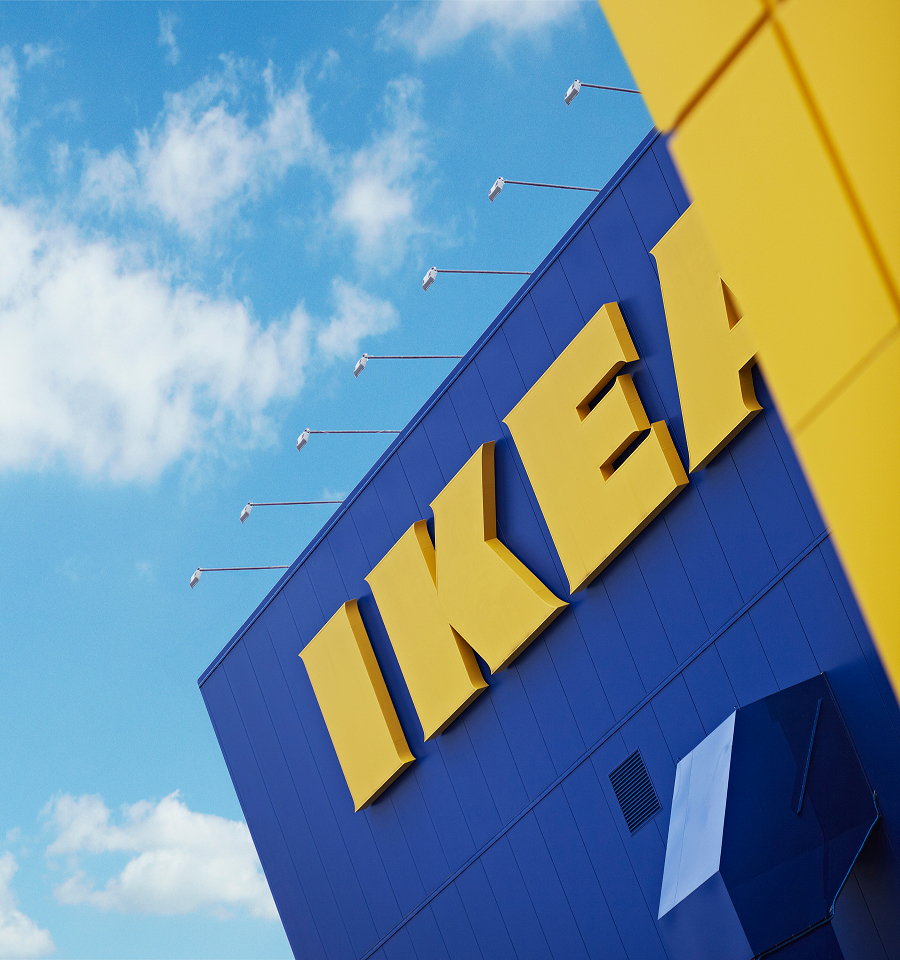
Close-up angled view of a building exterior with large yellow IKEA letters on a blue wall under a partly cloudy sky.

Frequently asked questions

How is an affinity segment different from a lookalike audience?

An affinity segment is one of the publisher's existing segments, scored for how closely it aligns with the advertiser's audience. A lookalike audience instead is entirely tailored to the advertiser and built with a sophisticated model.

Can affinity segments involve more than the advertiser and the publisher?

No. Affinity segments are limited to a two-party collaboration between the advertiser and the publisher.

If the advertiser's audience changes, does the affinity segment itself change?

No. The segment stays defined by the publisher, so its composition doesn't change. What can change is the affinity score, since that reflects how closely the segment currently aligns with the advertiser's updated audience.

View Other Targeting use-cases

Lookalikes

Extend reach to similar audiences using matched signals, without exposing the seed audience itself.

explore lookalike audiences ->

ID graph onboarding

Bring an identity graph into the clean room for matching and activation without sharing PII with the identity provider

explore ID graph onboarding ->

Remarketing

Build retargeting pools from matched audiences without sharing full raw customer data with the other party

explore Remarketing ->

Exclusion targeting

Suppress existing customers from a campaign without handing over the full customer list

explore exclusion targeting ->
Person in low light with colorful screen reflection; conveys focus and modern technology in data collaboration.

Talk to us about affinity segments